TikTok didn't make them climb the mountain
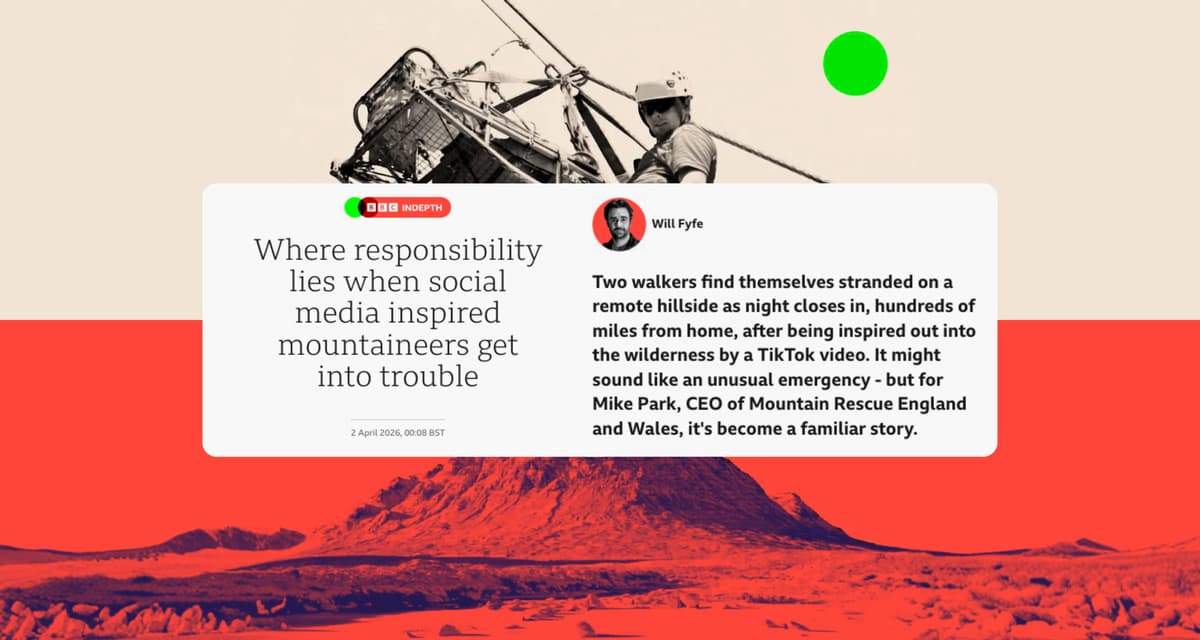
The BBC is running a piece this week about mountaineers getting into trouble after being "inspired by TikTok." Mountain Rescue England and Wales says it's become a familiar story: people see a video, head for the hills, and end up stranded.
It's a tidy narrative. Social media bad. Reckless youth. Platform to blame.
But people have been making stupid decisions in the mountains since long before anyone had a smartphone. Between 2002 and 2006, UK mountain rescue teams responded to 6,814 incidents involving nearly 8,000 people. TikTok didn't exist before 2017. So what were we blaming back then?
The answer, of course, is whatever was nearest.
Before TikTok it was Instagram hotspots. Before Instagram it was guidebooks that oversold easy routes. Before guidebooks it was word of mouth down the pub. Stefan Winter, head of sports development at the German Alpine Club, put it well recently: in the past, individuals plunged down Niagara Falls in wooden barrels. Today, influencers have to settle for the Matterhorn.
The impulse hasn't changed. People have always wanted to test themselves, show off, and occasionally do something profoundly idiotic in the process. Eve nicked the apple off the tree. Your grandad probably did something on a dare he still won't tell your nan about. Fear Factor had millions of viewers watching people eat insects for money, and nobody wrote a BBC Indepth feature asking where the responsibility lay.
But when TikTok is involved, the framing shifts. Suddenly the individual disappears and the platform becomes the actor. People aren't making bad choices. They're being "inspired" or "lured" into danger, as if they had no say in the matter.
This is where the media deserves a proper swing.
There's a reason "social media is dangerous" is such a reliable news story. It doesn't require the journalist to say anything uncomfortable about personal responsibility. It doesn't ask the reader to consider that adults are capable of making their own decisions and living with the consequences. It just points at the screen and says: that thing did it.
And it lets everyone off the hook. The person who didn't check the weather gets to be a victim. The parent who didn't teach basic risk assessment gets to be outraged. The outlet gets a clean villain for the headline.
Yes, callouts are up 24% since 2019. And yes, 18 to 24-year-olds are now the most rescued age group, overtaking the over-50s for the first time. But the post-pandemic outdoor boom, cheaper travel, and better mobile coverage all play a role in those numbers. Blaming TikTok is the easy answer. It's rarely the complete one.
Of course social media creates trends. Of course some people attempt things they're not ready for because they saw a 30-second clip. But that's not a technology problem. That's a judgment problem. And judgment has always been unevenly distributed.
The uncomfortable truth is that most of us don't want to hear "you made a bad call." We'd rather hear "you were misled." It's more comfortable. More sympathetic. And it means we don't have to change anything about ourselves.
Enjoyed this? I write occasionally about politics, tech, and media.