The EU's political ad ban is a gift to populists
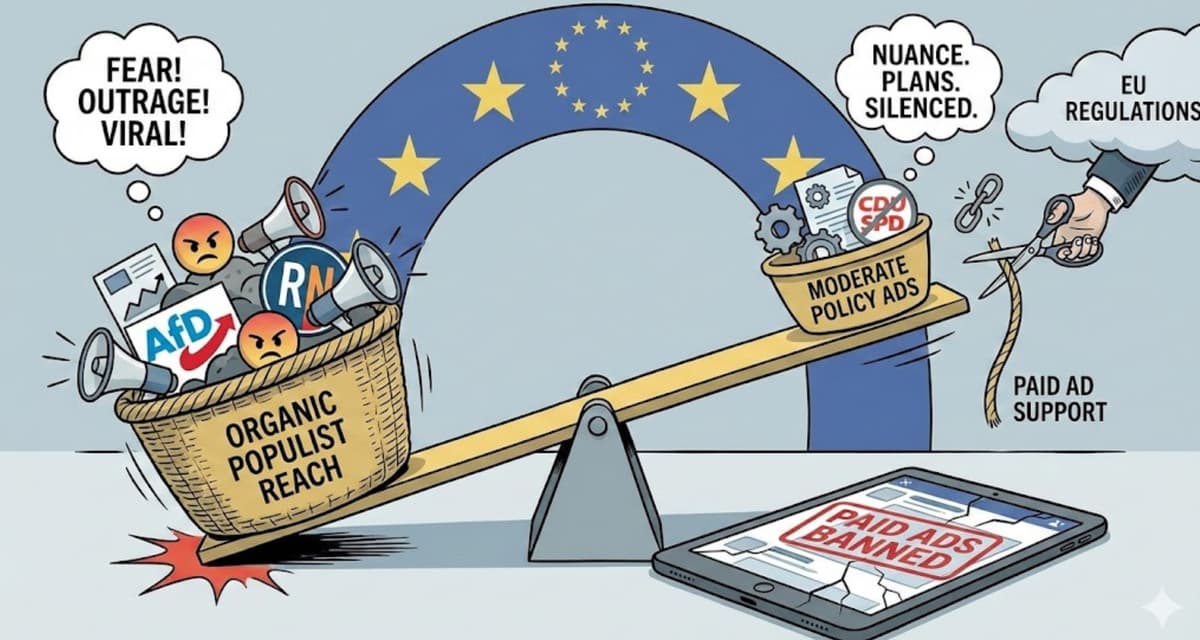
The EU thinks it just reined in Big Tech. In reality, it just handed a massive advantage to the AfD, Rassemblement National, and every other populist insurgent in Europe.
Starting in October, Meta will stop running political and social issue ads across the EU. Not because they want to, but because Brussels made the compliance burden so onerous that pulling out entirely was easier than playing along.
The stated goal was to protect democracy from misinformation and foreign interference. The actual result will be the opposite.
The asymmetry nobody wants to talk about
Paid advertising was one of the few tools moderate parties had to compete online.
Think about what centrist political content looks like. Policy explanations. Nuanced positions. Detailed plans. It's worthy, sensible, and utterly hopeless at generating organic reach.
Populist content is different. It's engineered to travel for free because it hits exactly the emotions that social media algorithms reward: outrage, fear, anger, hope. Data from the Financial Times shows this gap is particularly stark on social platforms compared to television.
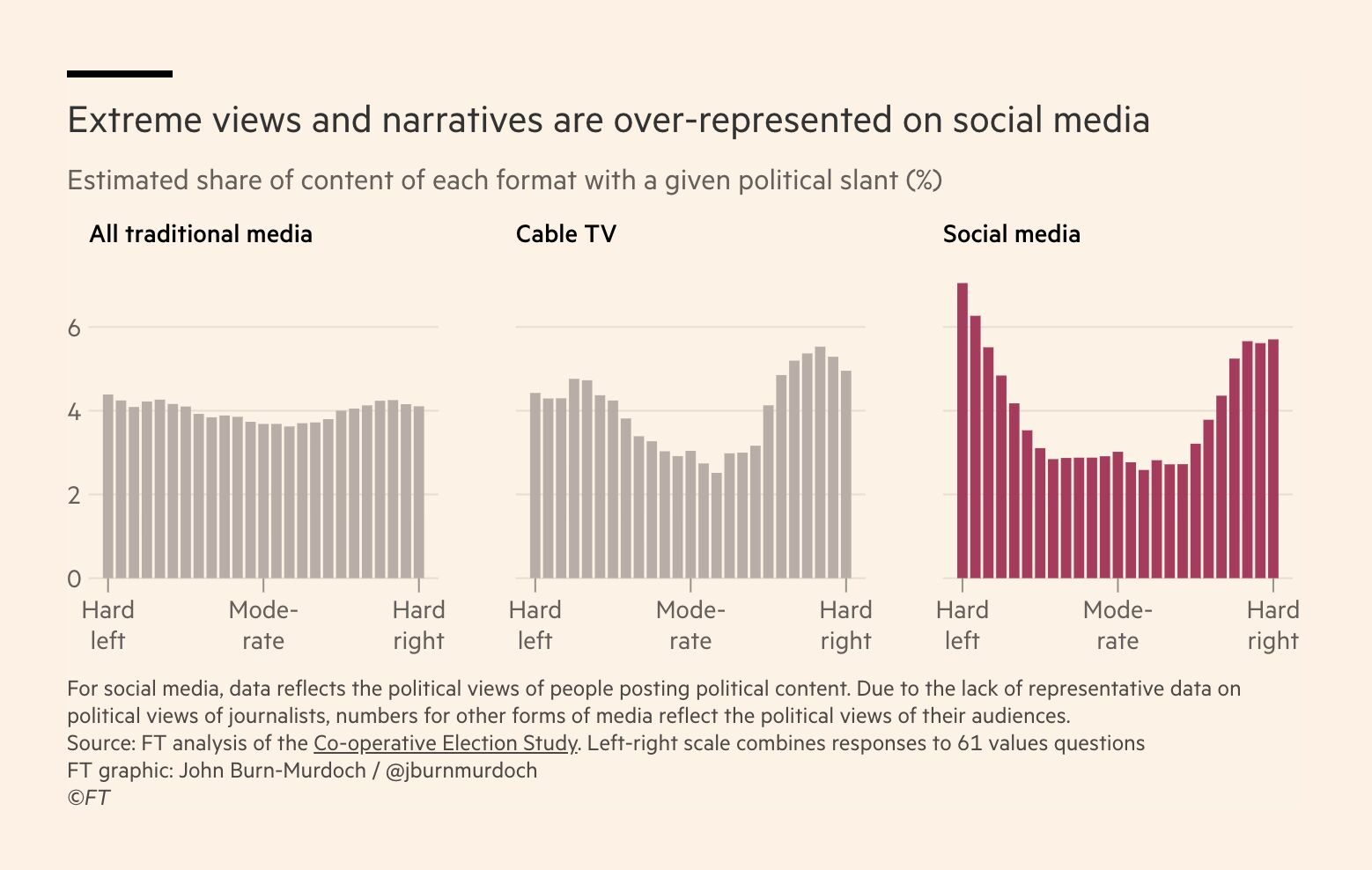
On TV, moderate and populist content compete on roughly equal footing. Online, the playing field tilts hard toward whoever can generate the strongest emotional response.
The CDU puts out a video explaining their fiscal policy. It gets 50,000 views. The AfD posts something inflammatory about immigration. It gets 5 million.
That's just the reality of how these platforms work.
What paid ads actually did
For mainstream parties, paid advertising was the equaliser. You couldn't out-viral the populists, but you could buy your way into people's feeds. You could target persuadable voters with messages they'd never see organically. You could compete.
That option is now gone in Europe.
The irony is brutal. Brussels set out to limit the influence of money in politics. Instead, they've made politics entirely dependent on what travels for free. And what travels for free is whatever triggers the strongest emotional response.
Who benefits
The question answers itself.
When you remove one of the few tools moderates had to cut through, the loudest voices get louder. The parties that were already winning the organic game, the ones skilled at generating outrage and fear, now face even less competition.
This isn't speculation. We've seen it play out already. In the German federal election, the AfD's TikTok and X presence dwarfed the SPD and CDU combined. The mainstream parties stuck to YouTube, Facebook and Instagram, platforms where you still need either paid support or genuinely viral content to get reach. The AfD had the latter. The SPD didn't.
Now imagine that dynamic with paid advertising removed entirely.
What comes next
Some will argue that mainstream parties should simply get better at emotional content. Learn to play the game. Out-populist the populists.
That's easier said than done - after all, we've been able to build a business at Topham Guerin teaching politicians around the world (mostly on the centre-right) how to do exactly that.
Centrist parties have a particularly tough challenge because their actual positions don't lend themselves to viral outrage. "We will incrementally improve the tax system" doesn't hit the same as "they're coming for your jobs."
You can't fake authenticity. And you can't manufacture outrage about moderation.
The EU wanted to protect European democracy from manipulation. They may have just made it harder for anyone except the manipulators to be heard.
Enjoyed this? I write occasionally about politics, tech, and media.