Too young to fix government, or too smart to ignore?
Some of the brightest minds of our generation are choosing to fix the US government.
So naturally, people are mad about it.
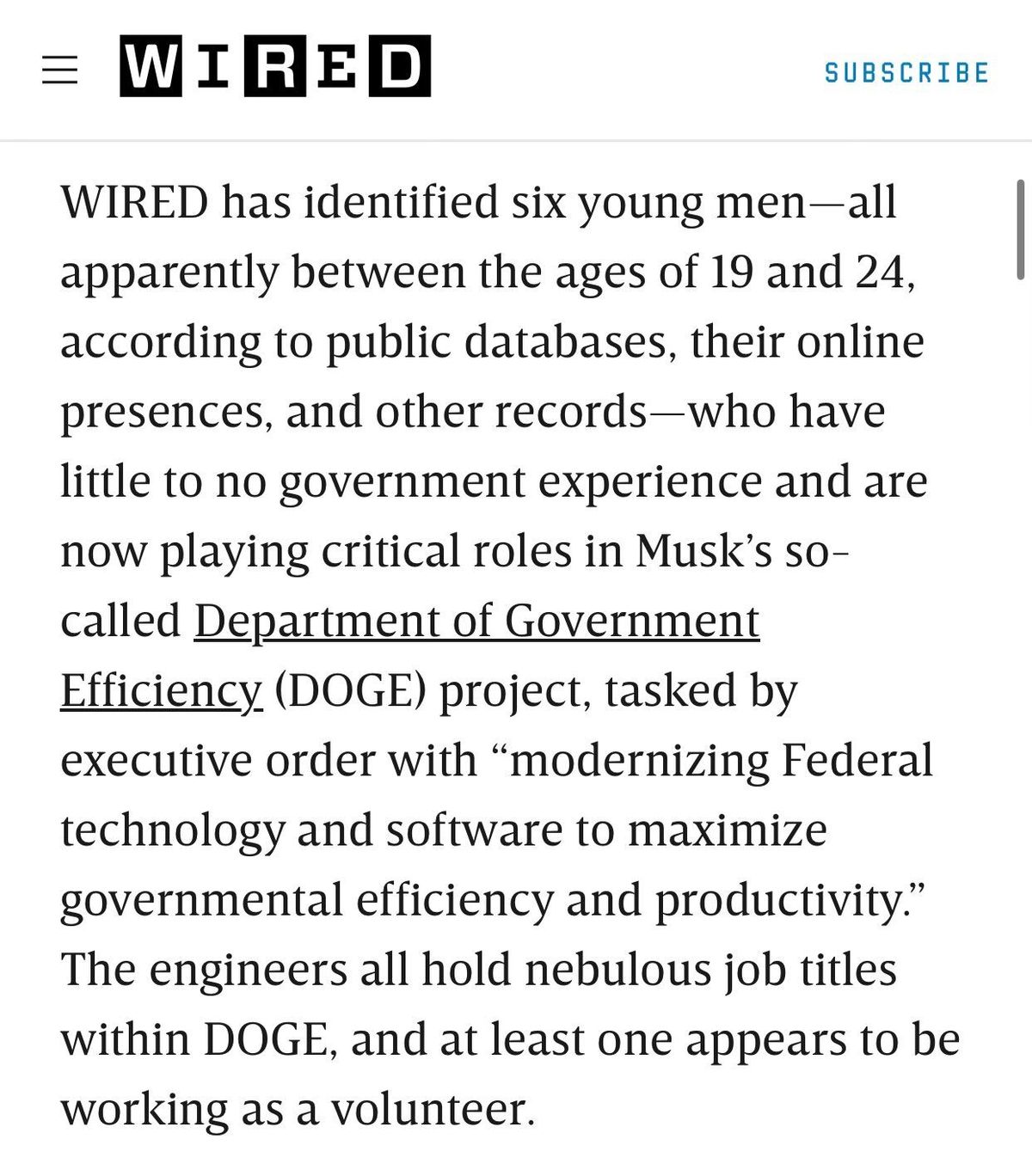
This week, WIRED ran a piece naming a group of young engineers working inside Elon Musk’s Department of Government Efficiency (DOGE). The angle? They’re too young. Too online. Too inexperienced.
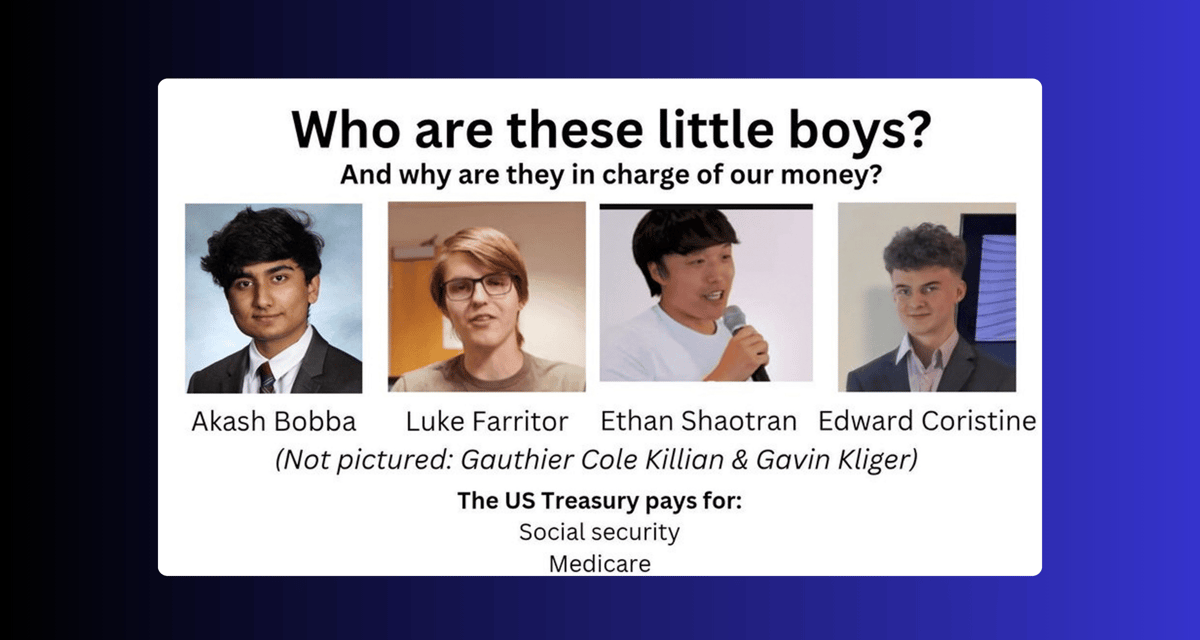
What happened next? An incredibly patronising meme went viral.
“Who are these little boys? And why are they in charge of our money?”

So who are these guys?
Akash Bobba, 21, has already worked at hedge funds, Meta, and Palantir.
Edward Coristine, 19, has clearly already impressed his colleagues after interning at Neuralink.
Ethan Shaotran, 22, founded an AI startup backed by OpenAI.
At 22, Luke Farritor built an AI that deciphered a 2,000-year-old Roman scroll no one had been able to read.
Luke is the perfect example of what critics are missing. He didn’t just show up to work on a government project: he’s already made history.
Using machine learning, he helped unlock the words inside a scroll buried in volcanic ash for two millennia. Historians said it couldn’t be done. He proved otherwise.
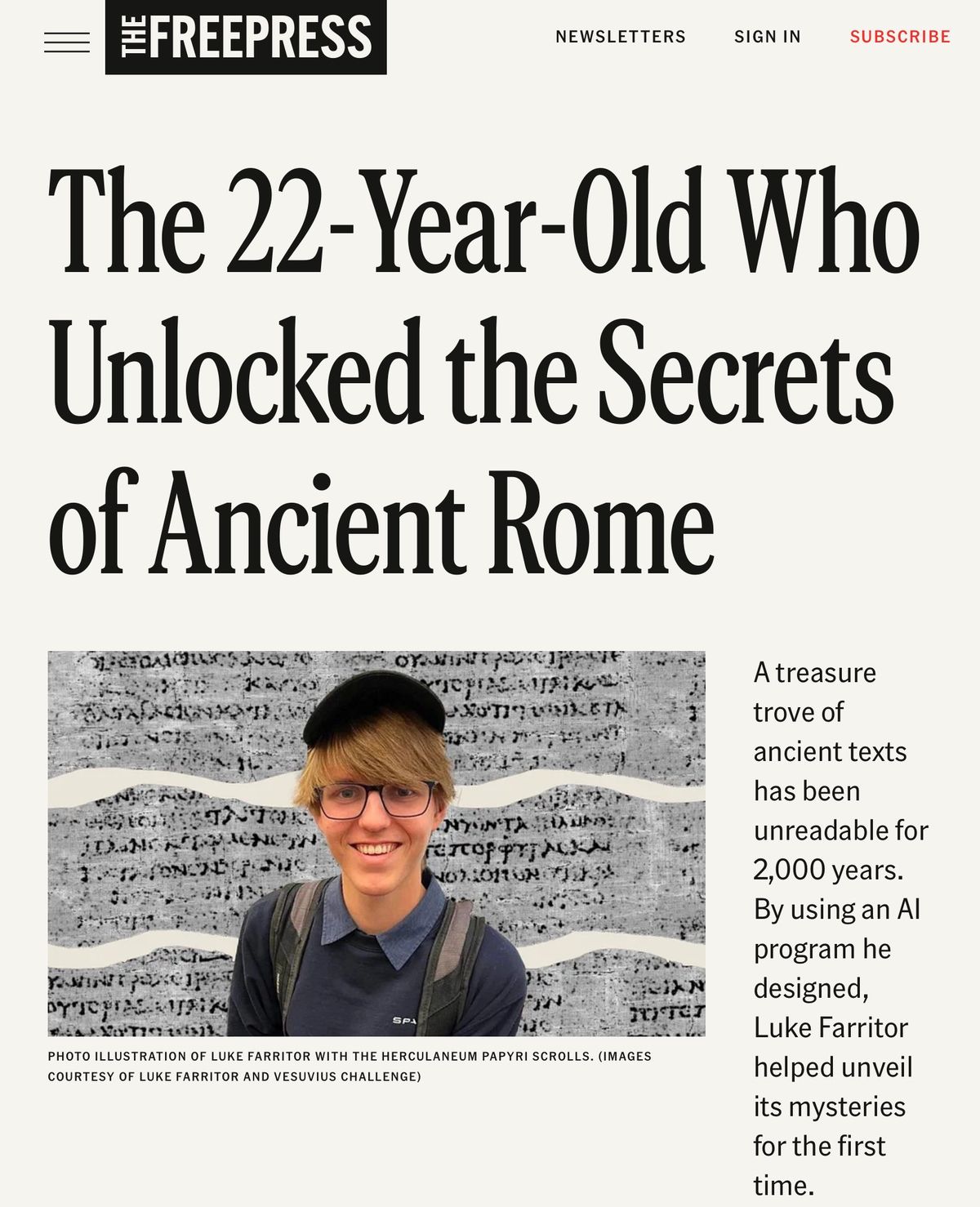
When I first heard about that project three years ago, I was blown away. It’s one of the best examples I’ve seen of science, tech, and history coming together to do something nobody thought was possible. And it’s exactly the kind of thinking we should want in public service.
We need more people like Luke. Not fewer.
None of them has a background in federal bureaucracy. But they’re bringing something else: actual talent. And probably a few mattresses in the office too — they’re working round the clock.
It’s totally fair to scrutinise DOGE. Question the reforms, the process, the politics. But dismissing the team just because they weren’t in student government ten years ago is lazy thinking.
More importantly, young people have always been at the forefront of change:
Young people have always led revolutions
Mary Shelley wrote Frankenstein at 18.
Blaise Pascal invented the first mechanical calculator at 19.
Isaac Newton developed calculus & the laws of motion at 23.
Napoleon Bonaparte became a general at 24.
Pablo Picasso co-founded the Cubist movement before 25.
And given that we are talking about fixing the bureaucracy of the US Federal Government, let's take a look at the ages of America's own Founding Fathers on July 4, 1776:
James Monroe was 18
Aaron Burr, 20
Alexander Hamilton, 21
James Madison, 25
Thomas Jefferson, 33
John Adams, 40
Paul Revere, 41
Washington, the elder statesman, was all of 44
And on a personal note - I was just 21 when we founded Topham Guerin. If we’d listened to the people saying we were too young, we’d never have built what we have today.
I'm used to being the youngest person in the room, and having to deal with condescending comments from people that respect "experience" over ability. That's why people's attacks on the DOGE team for their age really winds me up.
The fact that some of the brightest minds of our generation are choosing to fix public service should be something to celebrate.
But instead of engaging with their ideas, critics are stuck on how old they are. Maybe that says more about them than it does about the DOGE team.
Enjoyed this? I write occasionally about politics, tech, and media.